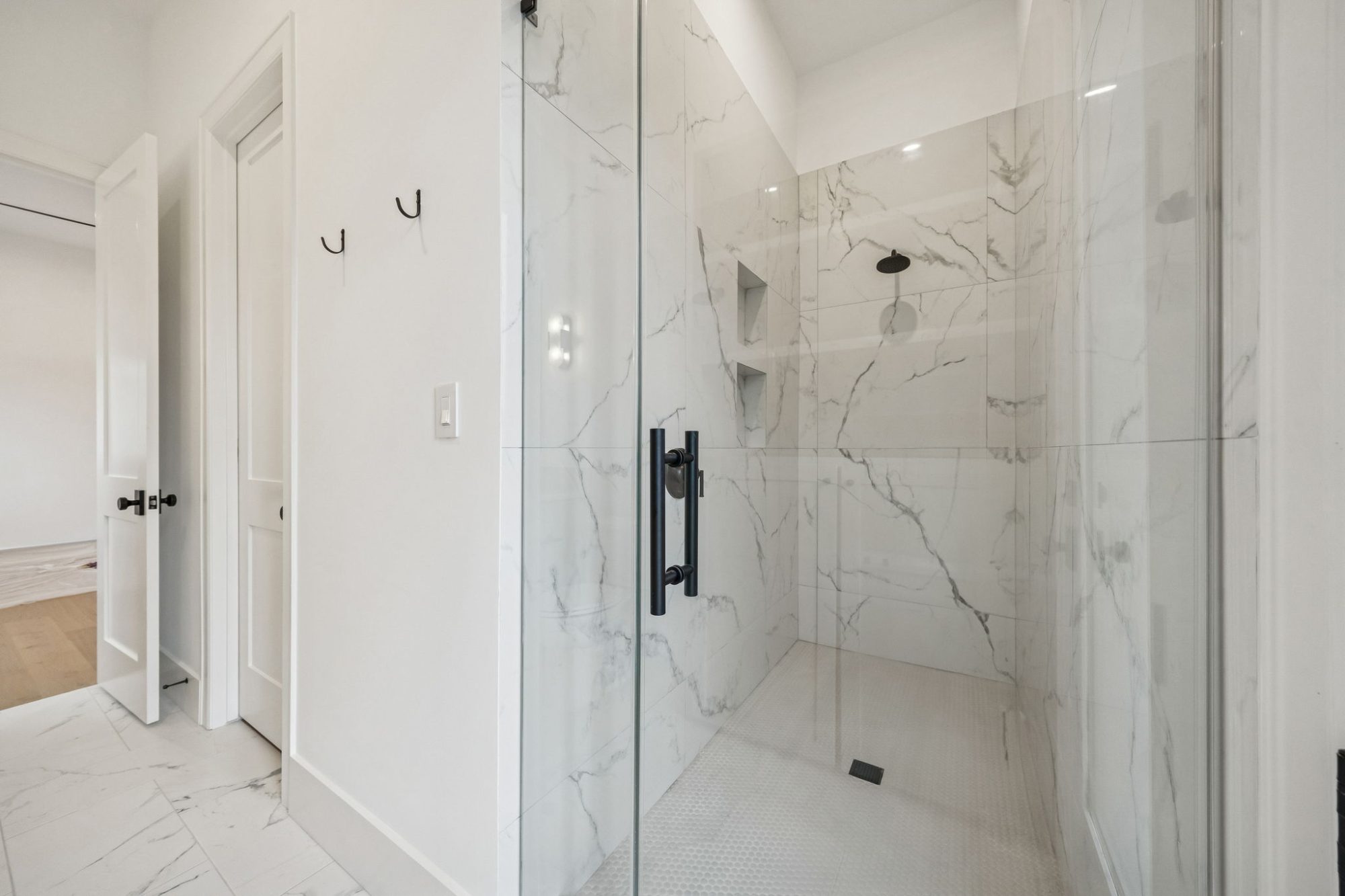
Water is the biggest threat to a bathroom in a Gulf Coast home. Between Houston’s humidity and daily showers, a bathroom that isn’t waterproofed correctly can look perfect on day one and hide water damage behind the tile for years. Here is what we do on every bathroom, and why.
Tile and grout are not waterproof
Most people assume tile keeps water out. It doesn’t. Standard cement grout is porous and can crack over time as a house moves, which lets water reach whatever is behind the tile. The real protection has to be under the tile.
A continuous waterproofing layer
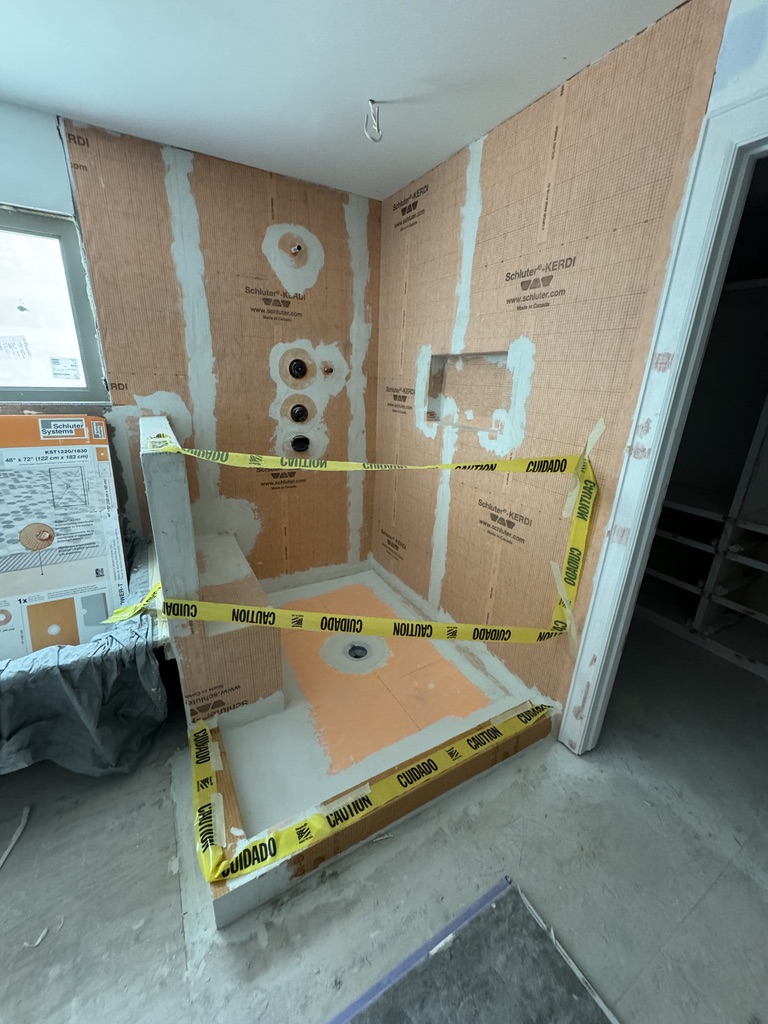
Before any tile goes in, we install a waterproofing membrane system (such as Schluter) across the shower walls, the shower floor and the joints between them. We pay special attention to corners, niches, benches and every spot where a pipe comes through the wall, because that is where leaks usually start. Then we check it before tile covers it up.
Why we push for epoxy grout
On many showers we recommend epoxy grout instead of standard cement grout. Epoxy grout is far more resistant to water, staining and cracking, and it doesn’t need regular sealing. It costs more up front, but in a Houston shower it is one of the best investments you can make. One of our clients put it this way: Devin said it was the one thing he wouldn’t let them skip.
Ventilation and humidity
Even a perfectly waterproofed shower needs somewhere for the moisture to go. A properly sized exhaust fan that vents outside, and an HVAC system that controls humidity in the whole house, keep bathrooms dry and help protect paint, trim and cabinets.
Cement grout vs. epoxy grout
| Standard cement grout | Epoxy grout | |
|---|---|---|
| Water resistance | Porous; absorbs water unless sealed | Nearly waterproof |
| Staining and mildew | Stains and darkens over time | Resists stains and mildew |
| Sealing | Needs resealing every year or two | No sealing needed |
| Cracking | Can crack as the house moves | More flexible and durable |
| Upfront cost | Lower | Higher material and labor cost |
| Best for | Low-moisture walls and backsplashes | Showers, shower floors and steam showers |
Grout is the finish layer, not the waterproofing. Epoxy grout keeps the tile looking new and cuts down on maintenance, but the membrane underneath is still what keeps water out of the walls.
Slope, drains and the details that matter
A shower floor has to move water to the drain every time, with no low spots where water can sit. Here is what we check:
- Proper slope on the shower floor toward the drain, so water never pools in corners or along the curb.
- A drain that bonds to the membrane, so there is no gap where water can get under the waterproofing.
- Linear drains where the design calls for curbless or large-format tile showers.
- Sealed niches, benches and valve openings, the spots where most shower leaks start.
- Movement joints at inside corners and changes of plane, filled with a flexible sealant instead of grout.
Renovating an older bathroom? Here is what we often find
When we open up bathrooms in older Houston homes, we regularly find showers built with no real waterproofing: tile set over drywall or a thin mortar bed, rotted studs behind the valve, and subfloor damage around the tub or toilet. That is why we plan for it on every bathroom renovation. Once the old tile is off, we repair any damaged framing or subfloor before the new waterproofing system goes in.
Warning signs your shower may be leaking
- Grout that stays dark long after a shower, or is cracking and falling out
- Loose, hollow-sounding or cracked tiles
- A musty smell that does not go away
- Peeling paint, bubbling or stains on the wall or ceiling next to or below the bathroom
- Soft spots in the floor near the tub, shower or toilet
- Baseboards or door trim in the bathroom that are swelling
If you see more than one of these, have it looked at soon. Water damage behind tile tends to spread.
Questions to ask your builder or remodeler
- What waterproofing system will you use, and does it cover the walls, floor and all transitions?
- How do you test the shower before tile goes in?
- Will you use epoxy grout, and what does it add to the cost?
- How is the exhaust fan sized, and where does it vent?
- What happens if you find water damage once the old tile is off?
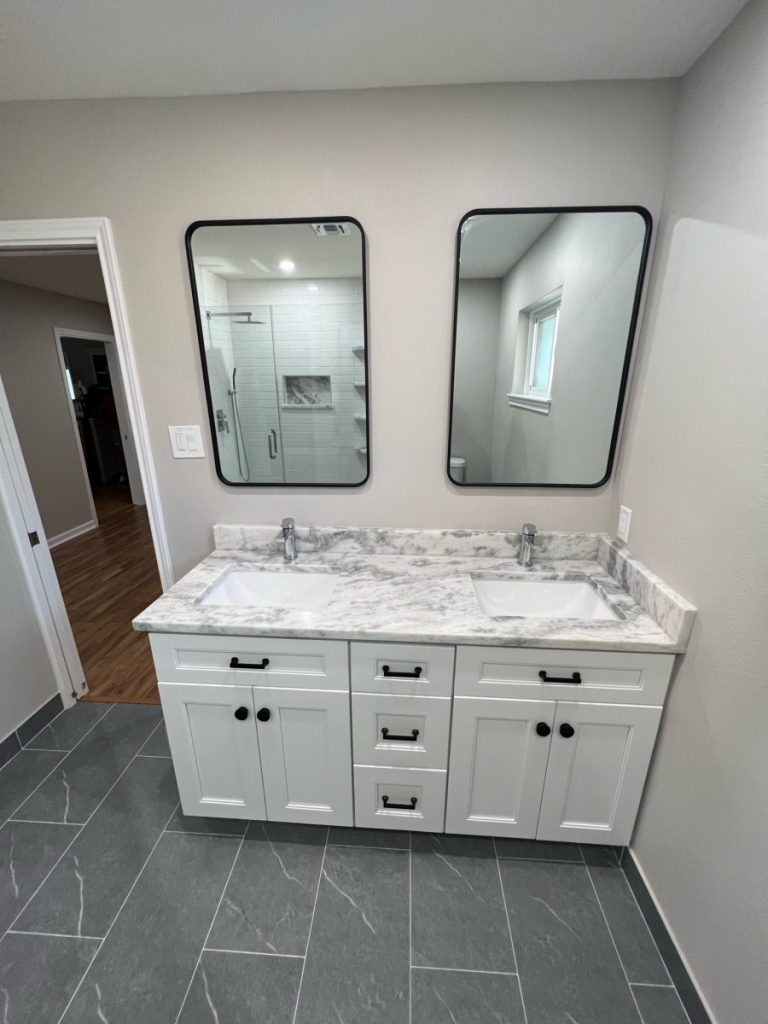
Planning a bathroom remodel?
See some of our bathrooms in our portfolio, read what clients say on our About Us page, or start your project.